


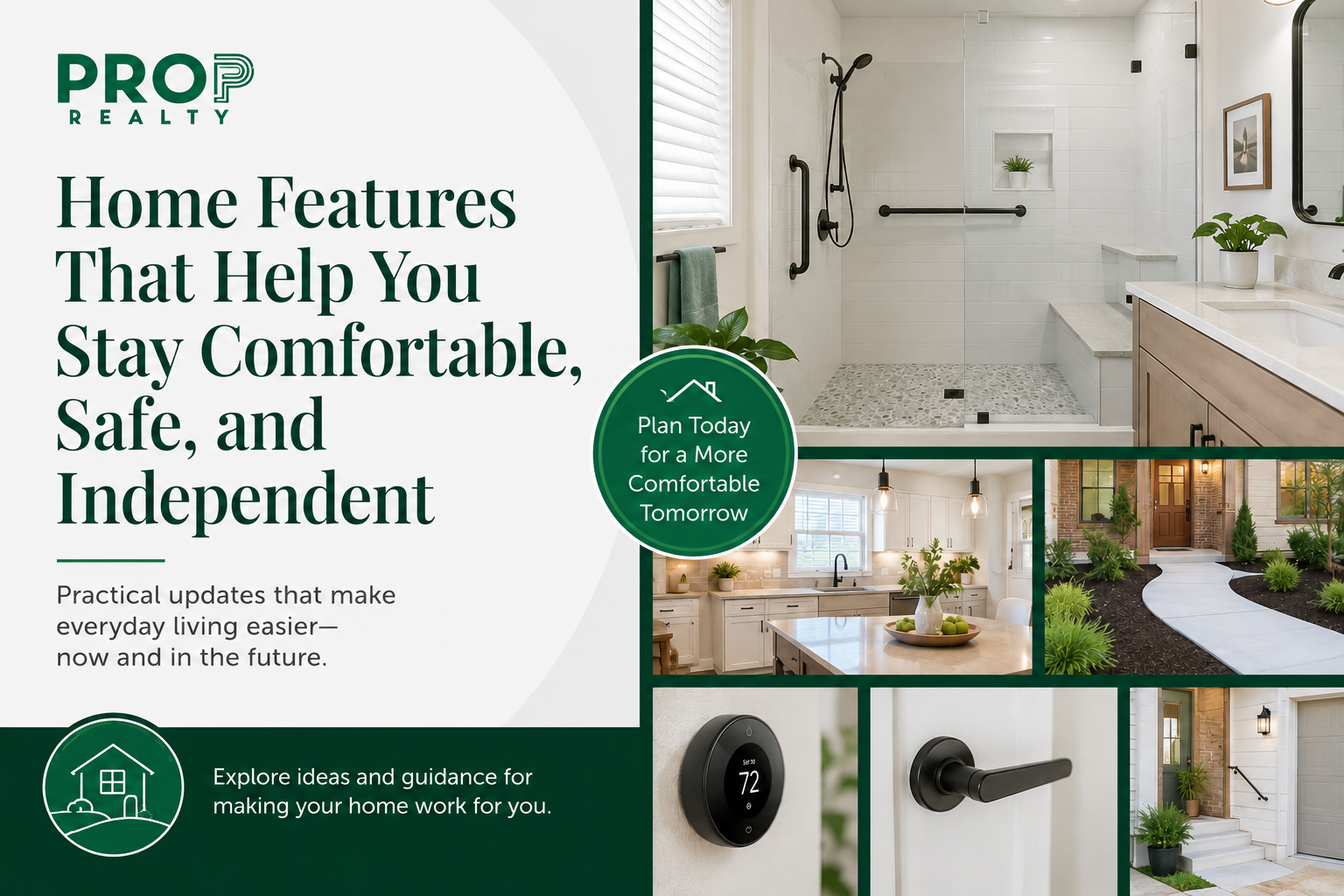
Home Features That Help You Stay Comfortable, Safe, and Independent
Most homeowners do not wake up one morning and suddenly decide it is time to move.
The conversation usually begins much earlier.
Maybe carrying groceries from the garage into the kitchen has become a little more tiring than it used to be. Perhaps climbing the stairs several times each day does not feel quite as easy. You might notice that stepping over the side of the bathtub requires more attention, or that reaching items stored in high cabinets is no longer as convenient.
These are ordinary moments that many homeowners experience over time.
They do not automatically mean it is time to sell your home.
More often, they signal that it may be time to think about whether your home still supports the lifestyle you want today and in the years ahead.
Many homeowners assume they have only two choices: stay exactly where they are or move. In reality, there is often another option.
Thoughtful updates can make a home more comfortable, easier to maintain, and better suited for everyday living without changing everything you love about it. Simple improvements such as better lighting, easier-to-use door handles, walk-in showers, wider pathways, or fewer maintenance responsibilities can make a meaningful difference.
Some homeowners discover their current home can continue serving them well for many years with only a handful of carefully planned improvements. Others realize another type of home may better support the next stage of life.
Neither decision is automatically right or wrong.
Our team at PROP Realty includes a Senior Real Estate Specialist who helps homeowners evaluate these important decisions through our Home Transition Guidance. The goal is not to convince someone to move. It is to help homeowners understand every available option before making an important decision.
Whether you are planning years ahead or simply wondering how your home can better support your daily routine, understanding the features that improve comfort, safety, and accessibility can help you make confident decisions for the future.
Key Takeaways
- Many homeowners can remain comfortably in their homes with thoughtful improvements rather than relocating.
- Small accessibility upgrades often make the biggest difference in everyday living.
- Features that improve comfort today often benefit homeowners of every age.
- Planning ahead provides more flexibility and more housing options.
- Every home transition should begin with understanding your options before making major decisions.
Living Comfortably at Home Is About More Than Age
Many people hear the phrase aging in place and immediately picture someone making significant accessibility modifications late in life.
In reality, the concept is much broader than that.
It is simply about creating a home that continues supporting your lifestyle as your needs evolve.
For one homeowner, that may mean reducing maintenance responsibilities. For another, it may mean making the home easier to navigate after knee surgery. A growing family may appreciate wider hallways, better lighting, and more functional storage just as much as someone planning for retirement.
Parents carrying young children, homeowners recovering from injuries, people with temporary mobility limitations, and grandparents welcoming grandchildren all benefit from homes that are easier to live in.
Good home design is not about preparing for old age.
It is about creating spaces that support everyday life.
That is one reason many builders today incorporate elements of universal design into new construction. Features that improve accessibility often make homes more comfortable for everyone who lives there.
Planning ahead also creates more choices.
Making improvements before they become necessary allows homeowners to complete projects on their own timeline instead of reacting during a stressful situation. That approach often leads to better decisions and more enjoyable results.
Our Home Transition Guidance process begins with understanding how you live today and what you want your home to provide tomorrow.
Start With Your Everyday Routine
One of the simplest ways to evaluate your home is to think about the activities you repeat every day.
Instead of focusing only on square footage or resale value, think about how your home supports your routine.
Ask yourself:
- Can you comfortably carry groceries from the garage into the kitchen?
- Do you frequently climb stairs throughout the day?
- Can you safely enter and exit your shower?
- Is there enough lighting in hallways during the evening?
- Can you easily reach frequently used kitchen items?
- Do door handles, faucets, and light switches feel easy to use?
- Is laundry located where it is convenient?
- Does the yard require more maintenance than you enjoy?
These questions are not about identifying problems.
They are about recognizing opportunities.
Sometimes homeowners discover that only one or two changes would dramatically improve how they use the home. Other times they begin seeing patterns that suggest a different type of property may better support their long-term goals.
Both outcomes provide valuable information.
The goal is not simply staying in your home longer.
It is creating a home that continues supporting the life you want to live.
Start With the Features That Have the Biggest Everyday Impact
When homeowners think about accessibility improvements, they often imagine major renovations.
In reality, the most meaningful changes are frequently the simplest ones.
Many improvements are relatively affordable and can make everyday tasks easier almost immediately. The key is identifying the features you use dozens of times each day.
Those are the improvements that often provide the greatest value.
Single-Story Living
One of the most requested home features among homeowners planning for the future is a single-story floor plan.
Eliminating stairs from daily routines can make carrying groceries, moving laundry, cleaning, and simply navigating the home more convenient.
That does not necessarily mean every homeowner should move into a one-story house.
Many two-story homes continue working well because the primary bedroom, kitchen, laundry room, and garage are located on the first floor.
The important question is not how many stories the home has.
It is whether your daily routine requires unnecessary trips up and down the stairs.
Open Floor Plans
Homes with open living spaces often provide easier movement between the kitchen, dining area, and living room.
Fewer walls and wider pathways can make the home feel more comfortable while also improving visibility and flexibility.
Open layouts also make entertaining family and friends easier while allowing homeowners to remain connected during everyday activities.
Wider Hallways and Doorways
Extra space often goes unnoticed until it is needed.
Wider hallways make moving furniture simpler, improve traffic flow, and provide greater flexibility for walkers, wheelchairs, or other mobility equipment should they ever become necessary.
Even homeowners who never require mobility devices often appreciate the openness these layouts create.
Walk-In Showers
Bathrooms are one of the first places homeowners begin making improvements because they are used every day and often involve wet surfaces, changing elevations, and limited space.
Replacing a traditional tub with a walk-in shower is one of the most common updates homeowners consider.
A curbless or low-threshold shower can make entering and exiting easier while also reducing the risk of tripping.
Other thoughtful features may include:
- Built-in shower seating
- Handheld showerheads
- Grab bars that complement the bathroom's design
- Slip-resistant tile or flooring
- Comfortable lighting around mirrors and vanities
Many homeowners choose these features because they are practical today, not because they are planning decades into the future.
Comfort and convenience rarely go out of style.
Comfort-Height Toilets
A slightly taller toilet can make sitting and standing easier for many homeowners.
This may seem like a small detail, but it can have a meaningful effect on everyday comfort, especially for someone managing knee, hip, or back discomfort.
It is also one of the easier bathroom updates to complete without a full renovation.
Lever Door Handles and Easy-to-Use Hardware
Door hardware is something most people never think about until it becomes difficult to use.
Traditional round knobs can require more grip strength than many homeowners realize.
Lever-style handles are easier to operate when your hands are full, after an injury, or simply during everyday activities.
The same principle applies to:
- Kitchen faucets
- Bathroom faucets
- Cabinet hardware
- Light switches
- Window locks
Small improvements like these can make a noticeable difference throughout the home without changing its overall appearance.
Lighting That Supports Everyday Living
Good lighting improves more than the appearance of a home.
It improves comfort, visibility, and confidence.
Many homes built years ago simply were not designed with today's lighting expectations. Hallways, staircases, closets, garages, laundry rooms, and bathrooms often benefit from brighter, more evenly distributed lighting.
Simple improvements may include:
- LED lighting throughout the home
- Motion-activated lighting in hallways
- Under-cabinet kitchen lighting
- Night lighting near bathrooms
- Well-lit exterior walkways
- Garage lighting upgrades
Improved lighting benefits everyone, from young families carrying sleeping children to homeowners welcoming guests after sunset.
Flooring That Creates Smooth Movement
Flooring influences how easily people move throughout a home.
Raised thresholds, loose rugs, uneven flooring, and frequent transitions between materials can interrupt that movement.
Many homeowners prefer continuous flooring throughout the primary living areas because it creates a smoother walking surface and a more cohesive appearance.
Popular choices often include:
- Luxury vinyl plank flooring
- Engineered hardwood
- Slip-resistant tile
- Low-pile carpet in selected rooms
Removing unnecessary trip hazards can make everyday living feel more comfortable without dramatically changing the home's style.
Small Changes That Can Make a Big Difference This Weekend
Not every improvement requires a contractor, a large budget, or weeks of planning.
Some of the most practical changes can be completed in a single weekend and may make the home feel easier to use right away.
- Replace round doorknobs with lever handles. This can make doors easier to open when your hands are full or when grip strength is limited.
- Install brighter LED bulbs. Focus on hallways, stairways, closets, bathrooms, and entry areas.
- Remove loose throw rugs. Rugs that slide, curl, or bunch can become unnecessary trip hazards.
- Add night lights. Place them along the route between bedrooms and bathrooms, near steps, and in darker hallways.
- Move everyday items within easy reach. Store frequently used kitchen, bathroom, and laundry supplies between waist and shoulder height.
- Check handrails for stability. Tighten loose hardware and make sure rails are easy to grip.
- Clear exterior walkways. Trim shrubs, move hoses, repair loose pavers, and remove items that block common paths.
These updates may seem minor, but they can improve comfort immediately while helping homeowners notice which larger changes may be worth considering later.
Kitchen Features That Make Everyday Tasks Easier
The kitchen is often called the heart of the home because it is where so much of daily life happens.
Preparing meals, gathering with family, enjoying coffee, and entertaining guests all happen here.
Making the kitchen easier to use often has an immediate impact on everyday life.
Accessible Storage
One of the simplest improvements homeowners can make is reorganizing storage.
Frequently used items should be easy to reach without climbing, bending, or stretching.
Many homeowners also appreciate:
- Pull-out shelves
- Deep drawers instead of lower cabinets
- Lazy Susans
- Soft-close drawers
- Pantry organization systems
These improvements are not just convenient.
They also reduce unnecessary movement throughout the day.
Comfortable Counter Heights
Standard countertops work well for many households, but some homeowners appreciate varied work surfaces that better accommodate food preparation, baking, or seated activities.
Universal design often focuses on flexibility rather than one specific solution.
The goal is creating a kitchen that works well for the people who use it every day.
Easy-to-Use Appliances
Technology continues improving kitchen convenience.
Homeowners often appreciate appliances with:
- Front-mounted controls
- Large digital displays
- Easy-to-read settings
- Pull-out freezer drawers
- French-door refrigerators
- Quiet operation
Choosing appliances based on everyday usability instead of appearance alone often provides lasting value.
Good Task Lighting
General overhead lighting may not be enough for food preparation, reading labels, or cleaning.
Under-cabinet lighting can brighten work surfaces without requiring a major renovation.
Homeowners may also benefit from pendant lights over islands, brighter pantry lighting, and switches placed in easy-to-reach locations.
Outdoor Features Are Just as Important
Many conversations about long-term living focus almost entirely on the inside of the home.
In Lubbock, the outdoor environment deserves just as much attention.
West Texas weather can make exterior maintenance a significant part of homeownership. Heat, wind, irrigation, mature landscaping, and seasonal yard work all require time and energy.
That is why outdoor improvements deserve careful consideration.
Smooth Walkways
Cracked sidewalks, uneven pathways, and loose pavers can become frustrating over time.
Maintaining smooth walking surfaces helps make the home easier to navigate while also improving curb appeal.
Handrails Where They Are Needed
Adding sturdy handrails at front entries, garage entrances, and backyard steps can improve confidence without changing the appearance of the home.
Many newer rail systems blend naturally into the home's architecture.
Covered Outdoor Living Areas
Outdoor spaces remain an important part of life in Lubbock.
A covered patio, pergola, or shaded seating area allows homeowners to enjoy time outside while reducing exposure to the summer sun.
These spaces also become natural gathering areas when family visits.
Easy-to-Maintain Landscaping
Lower maintenance does not mean eliminating landscaping.
It often means choosing plants, irrigation systems, and layouts that require less ongoing work.
Some homeowners choose:
- Native or drought-tolerant plants
- Automatic irrigation systems
- Smaller lawn areas
- Decorative rock landscaping
- Mulched planting beds
- Simplified flower beds
Reducing yard maintenance can create more time for travel, hobbies, volunteering, and family without sacrificing the appearance of the property.
During our Home Transition Guidance, many homeowners discover that thoughtful landscaping changes alone significantly improve how they feel about remaining in their current home.
Garage and Entry Access
The path from the garage into the home deserves special attention because it is often used more than the front door.
A high step, narrow doorway, poor lighting, or crowded landing area can make carrying groceries and entering the house more difficult.
Improvements may include:
- Adding a sturdy handrail
- Improving lighting
- Creating a wider landing
- Removing unnecessary storage from the entry path
- Reducing the height of the step when practical
Small changes to the garage entrance can improve one of the most frequently used areas of the home.
Technology Can Support Independence
Today's smart home technology is not just about convenience.
Many devices can improve comfort, security, and peace of mind while remaining easy to use.
Popular options include:
- Video doorbells
- Smart thermostats
- Voice-controlled lighting
- Smart locks
- Automatic garage door controls
- Video calling devices
- Motion-activated lighting
- Security cameras
- Water leak detection systems
These features can help homeowners remain connected with family while simplifying everyday routines.
Technology should support the homeowner, not complicate life.
The best smart home features are often the ones that quietly improve everyday living without requiring constant attention.
Good Design Benefits Every Generation
One of the biggest misconceptions about accessibility features is that they are designed only for older adults.
In reality, thoughtful design benefits nearly everyone.
Parents pushing strollers appreciate wider hallways.
Children benefit from better lighting.
Someone recovering from surgery values a walk-in shower.
Grandparents enjoy fewer stairs.
Homeowners carrying groceries appreciate lever door handles.
Guests notice smooth walkways and well-lit entrances.
This philosophy is often called universal design.
Instead of creating homes for one stage of life, universal design creates homes that remain practical through many different stages.
That is one reason these improvements often add value beyond everyday convenience.
Homes that are comfortable, functional, and easy to live in appeal to a broader range of future buyers as well.
Sometimes the Best Solution Is Renovating. Sometimes It Is Moving.
Every homeowner eventually reaches a point where it is worth asking an important question.
Should I continue improving my current home, or would another home better support the way I want to live?
There is not one correct answer.
Some homes can be adapted beautifully with a few well-planned improvements. Others may require significant renovations that do not make financial or practical sense.
That is why it is helpful to evaluate the entire picture rather than focusing on one project at a time.
For example, replacing a bathtub with a walk-in shower may significantly improve everyday comfort. Adding better lighting throughout the home may make daily routines easier. Updating landscaping may reduce maintenance without changing where you live.
Those improvements may be all that is needed.
In other situations, homeowners discover that stairs, an oversized yard, an outdated floor plan, or extensive maintenance requirements continue creating challenges even after several renovations.
That is often when another housing option begins making more sense.
Some homeowners decide a garden home provides the right balance of privacy and lower maintenance. Others choose newer construction with updated systems and modern layouts. Some decide staying exactly where they are remains the best decision after making a few thoughtful improvements.
The important part is not choosing one path over another.
It is understanding every available option before making a major decision.
That is exactly what our Home Transition Guidance process is designed to help homeowners do.
Planning Ahead Gives You More Choices
One of the greatest advantages homeowners have is time.
Making decisions before they become urgent usually creates better outcomes.
Waiting until an unexpected injury, health concern, or family emergency forces a decision can limit the number of available options.
Planning ahead allows homeowners to move at their own pace.
It provides time to:
- Prioritize home improvements
- Compare renovation costs with moving costs
- Understand the current value of the home
- Explore lower-maintenance housing options
- Discuss future plans with family members
- Create a realistic timeline
- Budget for future improvements
- Make thoughtful decisions instead of rushed ones
Even if your decision today is to stay exactly where you are, having a long-term plan creates confidence.
Many homeowners find peace of mind simply by knowing what their options are should their needs change in the future.
The best time to begin planning is not when you are forced to make a decision.
It is while every option is still available.
How a Senior Real Estate Specialist Can Help
Home transitions often involve much more than buying or selling a house.
They involve family conversations, financial planning, health considerations, lifestyle changes, and long-term goals.
Sometimes adult children are helping parents evaluate their options. Sometimes homeowners are simply planning ahead while they still have complete flexibility.
Our team at PROP Realty includes a Senior Real Estate Specialist because these conversations deserve specialized knowledge and thoughtful guidance.
Rather than assuming every homeowner should move, we help people evaluate every available path.
That conversation may include:
- Remaining in the current home
- Making accessibility improvements
- Reducing maintenance responsibilities
- Preparing a home for the market
- Exploring garden homes or other housing options
- Comparing renovation costs with moving expenses
- Creating a long-term housing plan
Every homeowner's priorities are different.
That is why our conversations always begin with listening first.
Through our Home Transition Guidance, we help homeowners understand their choices before recommending a direction.
Frequently Asked Questions
What does aging in place mean?
Aging in place means living safely, comfortably, and independently in your own home as your needs change over time. It often involves thoughtful improvements that make everyday routines easier while preserving the parts of the home you value most.
Can a two-story home still work for long-term living?
Yes, especially when the primary bedroom, kitchen, laundry room, and a full bathroom are located on the first floor. The main consideration is whether daily life requires frequent trips up and down the stairs.
Are accessibility improvements likely to hurt resale value?
Well-designed improvements usually support functionality without making the home feel clinical. Features such as better lighting, wider pathways, walk-in showers, practical storage, and smooth flooring often appeal to a wide range of buyers.
How should families begin a conversation about future housing needs?
Start with everyday routines and preferences rather than focusing immediately on moving. Ask what is working well, what feels difficult, and what changes might improve comfort. Keeping the conversation practical and respectful usually leads to better decisions.
What should I evaluate before buying a home for long-term living?
Look beyond appearance and square footage. Consider the floor plan, number of steps, bathroom accessibility, garage entry, yard maintenance, storage, lighting, and whether the home's most important spaces are easy to reach.
Check out this article next